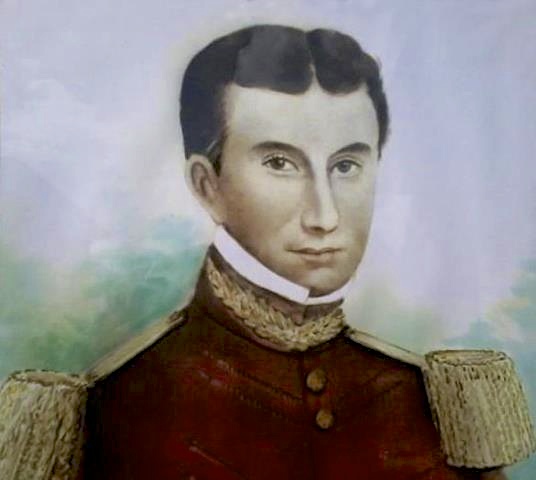
John Taylor was born in Lauder, Scotland on 19 March 1788 and christened 10 days later. He joined the East India Company as a young man and married Sarah Falconar Graham on 17 July 1823 in Bombay, India.
As John was sent to various postings, the family also moved. Their first daughter Jessie was born in 1824 in Chittagong, Burma (later marrying William Ferrie in Edinburgh in 1845). She eventually settled in the US and died in Sullivan County, New York in 1900.
Alexander Falconar Taylor was born on 8 October 1826 in Calcutta (eventually dying on 23 September 1876). He was followed by Charles Metcalfe Taylor, who was John Taylor was christened at Lauder Kirk on 29 March 1788born in 1828, later dying in Fiji. Next to be born was William Graham Taylor, on 26 November 1830 in Meerut. He is also thought to have died in Fiji.
Sarah Falconar Taylor was born in 1832 in Meerut, India. She later married Thomas James Martin in 1870 (a bank cashier who died in Fiji in 1882) and died in Dunedin, NZ in 1892.
Matilda Vernor Taylor was also born in Meerut on 31 March 1834. She later married William Alves in Saint John, Canada in 1856 and died in April 1896 in Dunedin, NZ.
It is not known exactly when the family returned to Britain but the youngest son Archibald was born in Edinburgh, Scotland in 1839. John Taylor died in St Andrews on 26 July 1841.
John’s wife Sarah was born on 10 January 1799 in Haddington, Scotland. After John died, Sarah and her children travelled to New Zealand. She died in Dunedin on 11 August 1871.
The Army of India Medal (AIM) was a campaign medal approved in 1851 for issue to officers and men of the British Army and Honourable East India Company. Approved on 21st March 1851, the award was given retrospectively by the East India Company to survivors of various actions during the period 1799 to 1826. This period encompassed four wars: the Second Mahratta War (1803-4), the Gurkha War (1814-16), the Pindaree or Third Mahratta War (1817-18) and the First Burmese War (1824-26). Each battle or action covered by the medal was represented by a clasp on the ribbon; twenty-one were sanctioned (although the maximum awarded to one man was seven). The medal was never issued without a clasp, and was only awarded to survivors and, as such, there are substantially fewer medals issued when compared with the number of men who served during this period. This was largely due to the extreme lapse of time between the wars commemorated and the issue of the medal – forty-eight years had passed between the first battle commemorated – Allighur in 1803 – and the date of issue, 1851. Some 4,500 medals were awarded in total – most with only a single clasp.
This medal followed on from the precedent set by the Naval General Service Medal and the Military General Service Medal, as retrospective awards for past campaign service.
The majority of the British medals and clasps were made of solid silver, though some were issued in bronze versions, mainly to Indian non-combatants. The majority of the British campaign awards were circular, usually 36mm in diameter.
Medals were worn suspended from their own specific ribbons. These were first made of silk but cotton was increasingly used as the nineteenth century developed. Their own colours often have a symbolic significance: the equal stripes of the ‘1939 to 1945 Star,’ for example, are dark blue to represent the service of the Royal and Merchant Navies, red, to represent that of the Armies and light blue to represent that of the Air Force.
This article was written by Clive Underwood and originally appeared in The Taylor Gazette published for the 2014 Reunion.
 TaylorFiji.com